
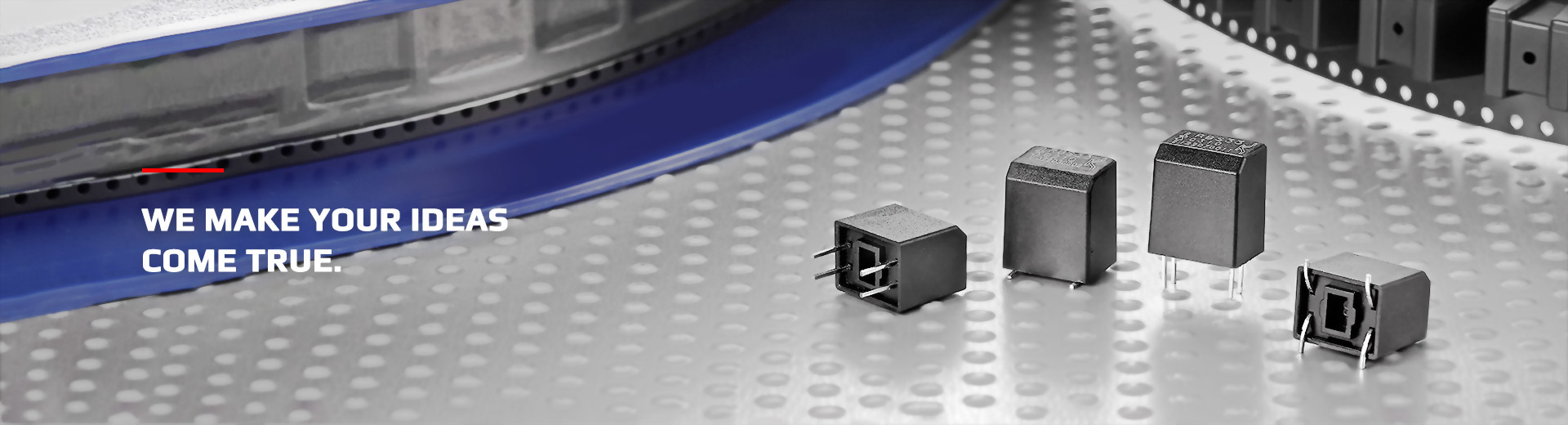
Ball Switch vs. Mercury Switch: Why Mercury-Free Designs Are Better for Modern Products

Ball Switch vs. Mercury Switch: Why Mercury-Free Designs Are Better for Modern Products
As environmental regulations become increasingly stringent, traditional mercury switches are gradually being replaced by mercury-free ball switches.
Ball switches retain the advantages of tilt detection and ON/OFF switching while providing improved safety, reliability, environmental compliance, and sustainable product design. As a result, they are widely used in home appliances, industrial equipment, medical devices, and IoT smart products.
This article explains the differences between mercury switches and ball switches, and why mercury-free designs have become an increasingly important choice for modern products.
Why Are Mercury Switches Being Phased Out?
A mercury switch is a mechanical switch that uses liquid mercury as the conductive medium.
When a product is tilted or its orientation changes, the liquid mercury flows under gravity and bridges two electrodes, causing the circuit to turn ON or OFF. Because of this simple and reliable operating principle, mercury switches were once widely used in products requiring tilt detection or safety protection, including:
However, mercury is a hazardous heavy metal. If a product is damaged during use, maintenance, or disposal, mercury leakage may occur, posing potential risks to both human health and the environment.
In recent years, environmental regulations and sustainability initiatives around the world have increasingly restricted the use of mercury-containing products, driving manufacturers to adopt mercury-free sensing solutions.
How Does a Mercury-Free Ball Switch Work?
A ball switch is a mechanical sensing switch that replaces liquid mercury with a metal ball.
When the product tilts, tips over, vibrates, or changes orientation, the internal metal ball moves under gravity or inertia, making or breaking contact with conductive terminals to generate an ON/OFF output signal.
Because the switching action is achieved through a simple mechanical structure, no complex control circuitry or software algorithms are required, allowing fast and reliable tilt detection and safety protection.
Compared with traditional mercury switches, ball switches provide improved safety and environmental performance while maintaining the advantages of simple design, high reliability, and cost efficiency.
Mercury Switch
Uses liquid mercury as a conductive medium. It provides reliable tilt switching but introduces hazardous-material handling and end-of-life concerns.
Ball Switch
Uses a metal ball and conductive contacts for tilt detection, providing a mercury-free solution that is simple and easy to integrate.
Ball Switch vs. Mercury Switch
Although both technologies provide tilt detection and ON/OFF switching functions, they differ significantly in materials, safety, environmental impact, regulatory considerations, maintenance, recycling, and market trends.

From a product lifecycle perspective, mercury-free ball switches better satisfy today's requirements for safety, environmental protection, and sustainable product development, making them a practical replacement option for traditional mercury switches.
Why Are More Products Switching to Mercury-Free Designs?
In addition to regulatory requirements, mercury-free ball switches offer several practical advantages, making them a preferred choice for OEMs and product design engineers.
Compliance with International Environmental Regulations
Mercury-free designs can help manufacturers address international environmental and hazardous-substance requirements and support access to global markets.
Improved Product Safety
The mercury-free design eliminates the risk of mercury leakage during product use, maintenance, recycling, and disposal.
Simple and Reliable Design
Provides direct ON/OFF output without requiring complex software algorithms, making integration into electronic products straightforward.
Cost-Effective Solution
A simple mechanical structure and reliable switching mechanism can support efficient product design and maintenance.
Flexible Design Options
Different operating angles, package sizes, mounting directions, and contact configurations can support a wide range of product requirements.
Conclusion
As the global market continues to emphasize safety, environmental protection, and sustainable product design, mercury-free ball switches have become an important solution for tilt detection and safety protection applications.
Compared with traditional mercury switches, ball switches offer several advantages, including:
- Mercury-free construction
- Support for environmental compliance requirements
- High reliability
- Simple switching and integration
- Simple mechanical design
These benefits enable modern products to achieve higher levels of safety, environmental performance, and design efficiency.
If you are planning to upgrade an existing product or replace a traditional mercury switch with a modern mercury-free solution, it is recommended to evaluate the required operating angle, mounting direction, contact state, electrical specifications, and operating environment during the early design stage, and work closely with an experienced supplier to ensure a smooth transition and successful product validation.
Looking for a Mercury-Free Replacement Solution?
Contact the OncQue team to discuss your current switch specifications, operating angle, mounting direction, and application requirements.