
What Is a Ball Switch? Working Principle, Features, Applications & Selection Guide

What Is a Ball Switch?
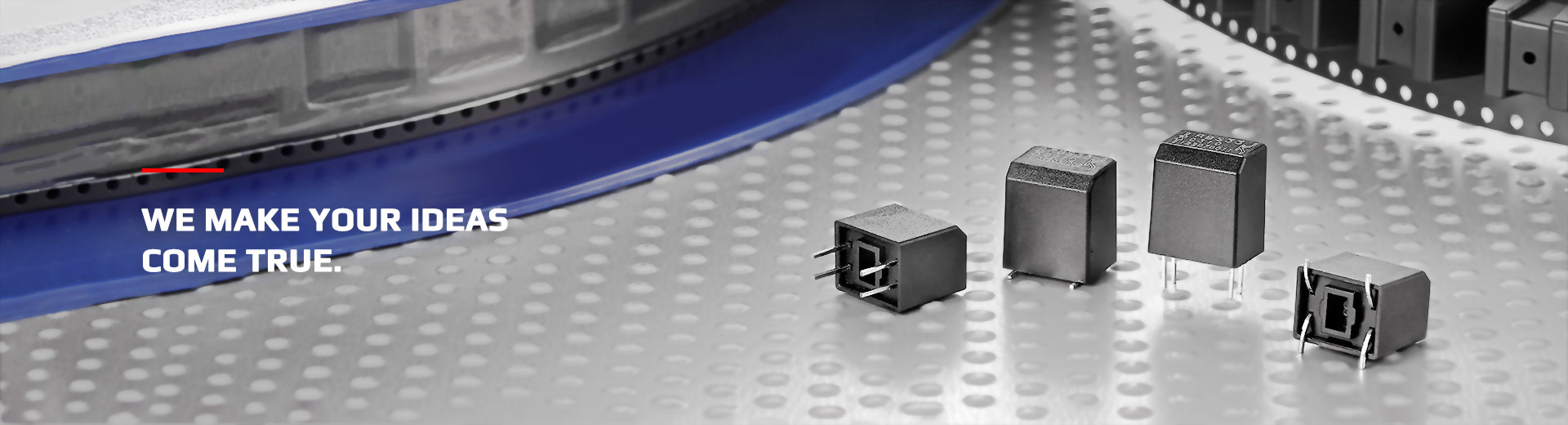
A ball switch, also known as a ball tilt switch or roll ball switch, is a compact mechanical sensor that changes its electrical contact state when an internal metal ball moves under the influence of gravity or inertia.
When a device tilts, tips over, vibrates, or changes orientation, the ball rolls to another position and opens or closes the contacts, generating a direct and reliable digital ON/OFF signal.
Because the output is a simple ON/OFF signal, no complex signal processing or software algorithm is required to determine whether the device has reached a preset trigger condition.
Suitable Detection Functions
| ✓ Tilt Angle Detection | ✓ Equipment Tip-Over Protection |
| ✓ Vibration Event Triggering | ✓ Orientation and Position Detection |
| ✓ Tamper or Movement Detection | ✓ Safety Power Cutoff Control |
How Does a Ball Switch Work?
A typical ball switch consists of a housing, a metal ball, and conductive contacts. Gravity changes the ball position to open or close the circuit.
From Normal Position to Tip-Over Trigger
During normal operation, gravity keeps the ball in a predefined position where it contacts the conductive terminals. When the device reaches the specified operating angle, the ball moves away and changes the contact state. Once the device returns to its normal position, the ball returns and the circuit is restored.
| ✓ No MCU Programming Required | ✓ No ADC or Complex Algorithm Required | ✓ Fast, Real-Time Response |
| ✓ Ultra-Low Standby Power | ✓ Simple Circuit Integration | ✓ Reduced System Development Cost |

Why Choose a Mercury-Free Ball Switch?
Compared with traditional mercury switches, mercury-free ball switches better meet modern requirements for safety, environmental compliance, mass production, and reliability.
|
01
Environmental ComplianceComplies with international environmental regulations such as RoHS and REACH. |
02
Safer to UseContains no hazardous mercury, reducing risks during manufacturing, use, and recycling. |
03
Reliable ConstructionA proven mechanical structure provides stable performance with low maintenance requirements. |
04
Flexible Operating AnglesMultiple operating angles and mounting directions are available to suit different product designs. |
05
Production-FriendlySuitable for high-volume production and OEM/ODM customization projects. |
Key Advantages of Ball Switches
Ball switches provide fast, reliable event-trigger signals without complex calculations.
|
BENEFIT 01
Ultra-Low Power ConsumptionConsumes virtually no power in standby, making it ideal for battery-powered and low-power IoT devices. |
BENEFIT 02
Simple Circuit DesignProvides a digital signal that can be connected directly to an MCU GPIO without complex analog processing. |
BENEFIT 03
Cost-EffectiveThe compact component and simple supporting circuit help reduce overall BOM cost. |
BENEFIT 04
High ReliabilityThe proven mechanical construction supports long-term operation with minimal maintenance. |
BENEFIT 05
Instant ResponseThe output state changes immediately when the preset operating angle or vibration condition is reached. |
Typical Applications
Widely used in products that require tilt detection, tip-over protection, orientation sensing, or vibration-triggered control.


How to Select the Right Ball Switch
Confirming key specifications early in the design phase improves system reliability and reduces redesign costs.
| 01 Operating Angle Define the angle range for normal placement, allowable tilt, and the point at which protection must be activated. | 02 Mounting Direction Select horizontal, vertical, or custom mounting according to PCB orientation, product position, and space constraints. | 03 Contact Type Determine the required contact logic in the normal and tip-over states, such as Normally Open (NO) or Normally Closed (NC). |
| 04 Electrical Conditions Confirm the operating voltage, current, contact rating, pull-up resistor, and downstream control circuit. | 05 Operating Environment Evaluate temperature, humidity, dust, vibration, shock, and possible contamination conditions. | 06 Product Validation Test the operating angle, recovery angle, false triggering, and long-term reliability in the actual product. |
Frequently Asked Questions
Answers to common questions encountered during engineering design and product selection.
Q1. Can a ball switch replace a mercury switch?
In many tilt detection and tip-over protection applications, a mercury-free ball switch can replace a mercury switch. The operating angle, mounting direction, contact type, and actual operating environment should still be validated.
Q2. Does a ball switch require an MCU?
Not necessarily. A ball switch can provide a direct ON/OFF contact signal or connect to a digital MCU input, depending on the product control architecture.
Q3. How should the operating angle be selected?
First define the normal placement angle, allowable tilt range, and the critical position at which protection should activate. Then verify the selected angle through product testing.
Q4. Can a ball switch detect vibration?
Some designs can detect vibration or movement events. For measuring vibration intensity, frequency, or direction, a dedicated vibration sensor should be considered.
Simple Construction, Reliable Safety Detection
With low power consumption, high reliability, fast response, and cost advantages, ball switches remain important sensing components for home appliance safety, industrial control, smart devices, and IoT applications.
Looking for the Right Ball Switch for Your Product?
The OncQue team can help with product selection, circuit design, and application-condition evaluation.
E-mail:SA@oncque.com.tw Tel: +886-4-2358-8178